


FERMER

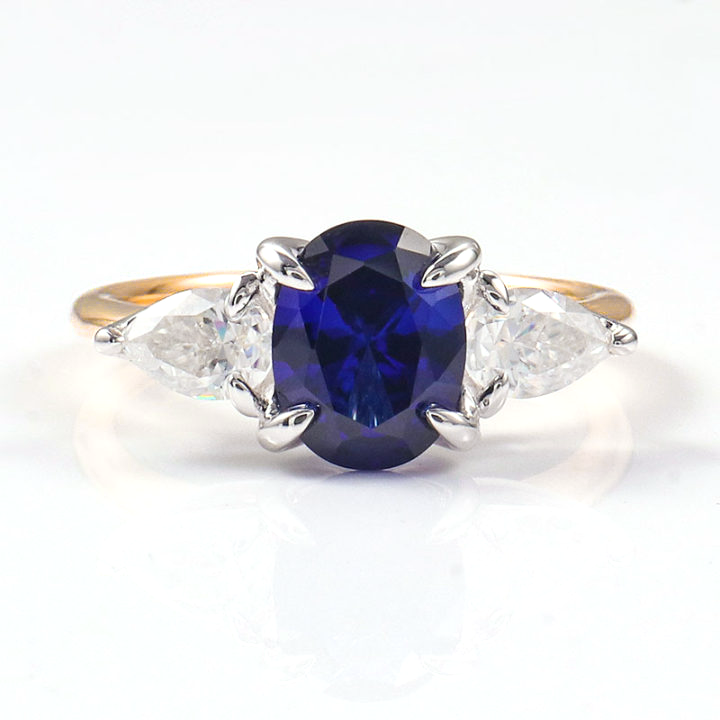
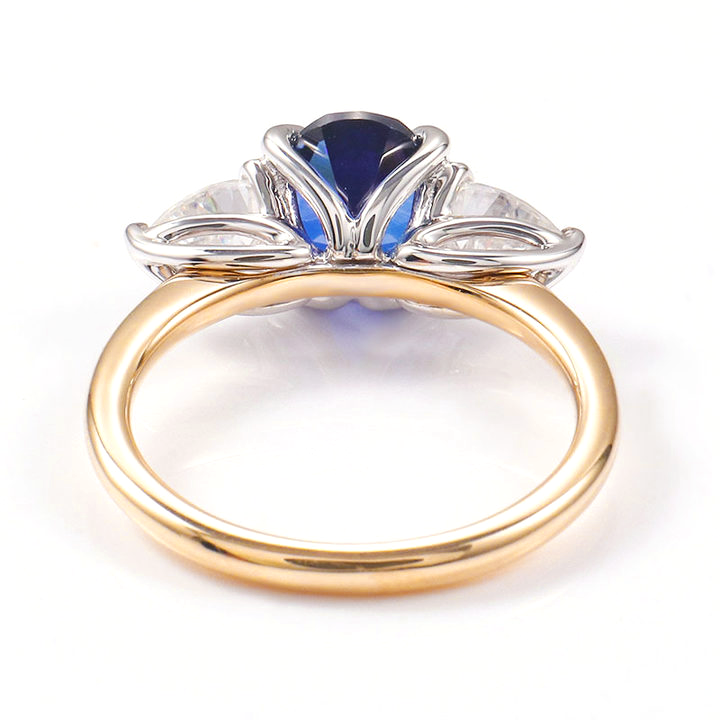
Three Stones Oval Sapphire Engagement Ring with Pear Moissanite

Three Stones Oval Sapphire Engagement Ring with Pear Moissanite

CR225-OV-25-10W
$1,569.00 USD
$0.00 USD
Metal
10K White Gold
10K Yellow Gold
10K Rose Gold
14K White Gold
14K Yellow Gold
14K Rose Gold
18K White Gold
18K Yellow Gold
18K Rose Gold
Platinum
✈ Free shipping
✔ Secure payments
Product Details
  • Total Stone Weight: 3.0ct
  • Main Stone Type: Sapphire
  • Main Stone Shape: Oval
  • Main Stone Size: 9*7mm(2.0ct)
  • Side Stone Type: Moissanite
  • Stone Color: Diamond White
  • Color Grade: D
  • Stone Clarity: VVS1
  • Side Stone Shape: Pear
  • Side Stone Size: 4*6mm(0.5ct*2pcs)
Shipping 
We process and ship all Karat Gold, Platinum & Custom orders within 10-20 day!

Lifetime Warranty
We stand behind every piece we create. All Karat Gold, Platinum, and Custom products come with a Lifetime Warranty covering fading, missing stones, and manufacturer defects. If any issue occurs, we will repair or replace your item.

Eco-Friendly & Sustainable  
We choose ethical materials that are not only gorgeous, but also beneficial to the planet.  

Size & Fit
All our rings are made true to U.S. standard ring sizes.
Check your size here.

Notice: The main stone over 0.5ct will come with a GRA/IGI/AGL certificate.

Different Karats of Gold

 
Karat Gold Purity Color Durability Hypoallergenic Properties Price Best Suited For
10K 41.70% Lighter tone with slightly muted appearance due to high alloy content Most resistant to scratching, denting, and daily wear Least hypoallergenic due to higher alloy content Most affordable option Active lifestyles, everyday jewelry, work environments, budget-conscious buyers
14K 58.30% Rich color Strong durability with good wear resistance Moderately hypoallergenic, especially in nickel-free compositions. Good for most wearers. Excellent value-to-durability ratio. Standard market price point. Daily wear jewelry, engagement rings, wedding bands. Most versatile option.
18K 75% Deep, rich color Moderately durable but more prone to scratching than lower karats Highly hypoallergenic, great for sensitive skin Premium price point reflecting higher gold content High-end jewelry, special occasions, luxury pieces, sensitive skin
24K 99.90% Intense gold color Extremely soft and easily damaged. Prone to scratching, denting, and deformation. Most hypoallergenic being pure gold. Virtually zero risk of reactions. Highest price point. Maximum precious metal value. Not suitable for daily wear

Moissanite vs. Diamond vs. Lab Diamond

 
  Moissanite Diamond Lab Diamond
Durability

Gemstones are measured on the Mohs scale, which addresses a gem's hardness.
Moissanites are at 9.25 on the Mohs scale, making them suitable for everyday wear. Diamonds, the hardest known naturally occurring mineral, are a 10 on the Mohs scale, making them the ideal option for engagement rings. Lab diamonds are a 10 on the Mohs scale, making them the ideal option for engagement rings.
Brilliance

Brilliance refers to the appearance of light reflected from the gemstone's interior.
Moissanites are slightly more brilliant than diamonds, though they feature more than twice the amount of fire. If a moissanite is larger than 1 carat, the difference in fire can be very noticeable as it has a refractive index of 2.64 to 2.69. Natural diamonds are slightly less brilliant than moissanite and feature two times less fire, though they still exhibit dispersion and scintillation. The refractive index of diamonds ranges from 2.417 to 2.419. Lab diamonds are slightly less brilliant than moissanite and feature two times less fire, though they still exhibit dispersion and scintillation. The refractive index of diamonds ranges from 2.417 to 2.419.
Color

Color is the presence or absence of color visible within a gemstone.
While most moissanites can now be grown as colorless or near colorless, they are also created in hues of teal, grey, green, yellow, and black. Natural diamonds occur in the colorless range, but they also occur in many colors, including pink, blue, and yellow from trace elements like nitrogen and boron. The rarest lab diamonds are those in the colorless range, but they are also created in many colors. Lab grown colored diamonds are more accessible than natural colored diamonds and can often be found in more vivid, fancier colors.
Price

Price references how much you will pay for a gemstone.
Moissanite is dramatically lower in price than diamonds of the same carat weight. Their pricing is based on size, shape, and whether the stone is colorless or near colorless. Natural diamonds are the most expensive. As they are mined from the Earth and take billions of years to form, they are much rarer than both moissanite and lab diamonds. In addition to their rarity, diamonds are priced based on their 4 C's and shape. Lab diamonds cost less than their natural counterparts due to their origin but cost more than moissanite. As with natural diamonds, lab diamonds are priced based on their 4 C's and shape.
Sourcing

Sourcing refers to the origin of the gemstone and how it was produced.
Moissanite is grown in controlled laboratories by professionals. Once formed, they're cut and polished. Natural diamonds form deep in the Earth. Then, they are mined, cut, and polished. Lab diamonds are grown in controlled laboratories by professionals. Once formed, they're cut and polished.
  • Different Karats of Gold

  • Moissanite vs. Diamond vs. Lab Diamond

 
Karat Gold Purity Color Durability Hypoallergenic Properties Price Best Suited For
10K 41.70% Lighter tone with slightly muted appearance due to high alloy content Most resistant to scratching, denting, and daily wear Least hypoallergenic due to higher alloy content Most affordable option Active lifestyles, everyday jewelry, work environments, budget-conscious buyers
14K 58.30% Rich color Strong durability with good wear resistance Moderately hypoallergenic, especially in nickel-free compositions. Good for most wearers. Excellent value-to-durability ratio. Standard market price point. Daily wear jewelry, engagement rings, wedding bands. Most versatile option.
18K 75% Deep, rich color Moderately durable but more prone to scratching than lower karats Highly hypoallergenic, great for sensitive skin Premium price point reflecting higher gold content High-end jewelry, special occasions, luxury pieces, sensitive skin
24K 99.90% Intense gold color Extremely soft and easily damaged. Prone to scratching, denting, and deformation. Most hypoallergenic being pure gold. Virtually zero risk of reactions. Highest price point. Maximum precious metal value. Not suitable for daily wear
 
  Moissanite Diamond Lab Diamond
Durability

Gemstones are measured on the Mohs scale, which addresses a gem's hardness.
Moissanites are at 9.25 on the Mohs scale, making them suitable for everyday wear. Diamonds, the hardest known naturally occurring mineral, are a 10 on the Mohs scale, making them the ideal option for engagement rings. Lab diamonds are a 10 on the Mohs scale, making them the ideal option for engagement rings.
Brilliance

Brilliance refers to the appearance of light reflected from the gemstone's interior.
Moissanites are slightly more brilliant than diamonds, though they feature more than twice the amount of fire. If a moissanite is larger than 1 carat, the difference in fire can be very noticeable as it has a refractive index of 2.64 to 2.69. Natural diamonds are slightly less brilliant than moissanite and feature two times less fire, though they still exhibit dispersion and scintillation. The refractive index of diamonds ranges from 2.417 to 2.419. Lab diamonds are slightly less brilliant than moissanite and feature two times less fire, though they still exhibit dispersion and scintillation. The refractive index of diamonds ranges from 2.417 to 2.419.
Color

Color is the presence or absence of color visible within a gemstone.
While most moissanites can now be grown as colorless or near colorless, they are also created in hues of teal, grey, green, yellow, and black. Natural diamonds occur in the colorless range, but they also occur in many colors, including pink, blue, and yellow from trace elements like nitrogen and boron. The rarest lab diamonds are those in the colorless range, but they are also created in many colors. Lab grown colored diamonds are more accessible than natural colored diamonds and can often be found in more vivid, fancier colors.
Price

Price references how much you will pay for a gemstone.
Moissanite is dramatically lower in price than diamonds of the same carat weight. Their pricing is based on size, shape, and whether the stone is colorless or near colorless. Natural diamonds are the most expensive. As they are mined from the Earth and take billions of years to form, they are much rarer than both moissanite and lab diamonds. In addition to their rarity, diamonds are priced based on their 4 C's and shape. Lab diamonds cost less than their natural counterparts due to their origin but cost more than moissanite. As with natural diamonds, lab diamonds are priced based on their 4 C's and shape.
Sourcing

Sourcing refers to the origin of the gemstone and how it was produced.
Moissanite is grown in controlled laboratories by professionals. Once formed, they're cut and polished. Natural diamonds form deep in the Earth. Then, they are mined, cut, and polished. Lab diamonds are grown in controlled laboratories by professionals. Once formed, they're cut and polished.

Let customers speak for us